

Photo Record
Images
Metadata
Object Name |
Postcard, Picture |
Collection |
Oil Museum of Canada Collection |
Accession number |
OMC 2003.008 |
Catalog Number |
OMC 2003.008.030 |
Other Number |
FD.001.002.002 pstcrd |
Title |
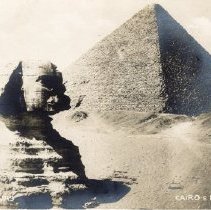
Cairo Pyramids |
Photographer |
Grevas, Fasanie |
Date |
12 Dec 1912 |
Description |
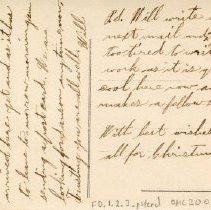
Black and white postcard with a photograph of a pyramid and the sphinx in Egypt. Printed on the bottom front: Fasanie Grivas, Cairo E Piramidi. Message on the back: Dec. 12/12. Dear Mother, The mail has not arrived here yet and as it has to leave tomorrow morning am sending a fast card. We are looking for Sanson anytime now. Trusting you are all well. Will P.S. Will write a letter next mail and generally too tired to write after work as it is quite cool here now and it makes a fellow sleepy. With best wishes t you all for Christmas. Will Note: (It must have been sent in an envelope since the address is not on the postcard.) Note: He was talking about International Driller, Jim Sanson, who was also from Petrolia. |
Provenance |
William O. Gillespie was an International Driller from Petrolia. In his twenty-four years working as an International Driller, William O. Gillespie (Bill to his friends) worked in six countries on four continents. Gillespie began his career in international drilling at the age of 20. An American land development company was looking for an expert to drill for water in Cuba and Gillespie left Canada looking for adventures. After cutting his teeth in Cuba, Gillespie moved further afield to work for the Shell Trading and Transport Company developing oil extraction in the Dutch East Indies (modern-day Indonesia). Before long Gillespie moved to Australia to work for the International Boring Company (Australians use the word "boring" in the same way Canadians use "drilling"). While he worked in Australia for three years, Gillespie was not fond of the country. Men in Australia lived on "dried food and bad water," wrote Gillespie in a letter to family in Canada. He was struck by illness in 1909, forcing him to return to Canada for five months to recover. But even illness could not deter Gillespie from international drilling. In December of 1909, having recuperated, he left for Egypt. Of all the exotic locales visited on his world travels, Gillespie believed Borneo to be the most thrilling. During his time on the island of Borneo, Gillespie wrote: "Don’t think that romance and adventure are dead out here. Piracy still goes on to a certain extent. Last year the Chinese pirates captured a fair sized steamer… No one knows exactly what they intended to do. When it was all over, twelve were dead on the spot." Travel was a way for Gillespie to quench his thirst for adventure. He was fascinated by the local traditions of head-hunting in Borneo, collecting books and artifacts on the subject. In many respects, William Gillespie embodies what it was to be an International Driller. International Drillers were jacks-of-all-trades - people who could work in any environment or condition and show the determination and ingenuity that made Canadian drillers so renowned. When not drilling, Gillespie would build timber dams and bridges for local communities, tend the company’s horses, and fashion horse shoes from discarded pieces of metal. Few can claim a career as diverse as William O. Gillespie. |
Print Size |
13.7cm x 8.6cm |
Search Terms |
Cairo, Egypt Egypt International Driller Postcard, Picture Pyramid Sphinx |
People |
Gillespie, Bill Gillespie, Will Gillespie, William Sanson, James |
Place |
Egypt |